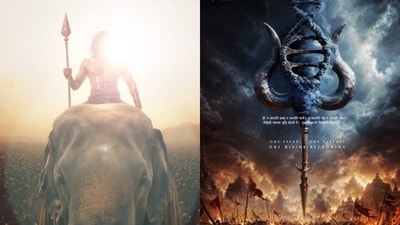
Mythology-inspired big-screen spectacles are becoming one of the most exciting trends in South Indian cinema. While Telugu cinema has consistently explored stories rooted in Sanatana Dharma and Indian epics, a similar wave now appears to be emerging in Tamil cinema as well.
Ever since Trivikram Srinivas officially announced God of War with Man of Masses NTR, the project has generated tremendous buzz across industries. The film is expected to go on floors first, making it the earliest major project among the two to enter production.
Soon after the announcement of God of War, discussions intensified when reports surfaced about Dhanush and Vetrimaaran’s ambitious Thamizh Murugan, a film said to be inspired by the legacy of Lord Murugan (Kumaraswamy).
The timing of both announcements has naturally sparked comparisons among movie lovers, with many debating how two industries are approaching mythological themes through different cultural lenses. Though both films draw inspiration from Indian mythology, each is expected to present a completely distinct narrative and cinematic vision.
What makes this comparison even more fascinating is the filmmakers behind these projects. Trivikram Srinivas is known for blending mythology, philosophy, and commercial storytelling into emotionally powerful narratives, while Vetrimaaran is celebrated for his raw, realistic, and socially rooted filmmaking. Their unique creative approaches are likely to offer audiences two entirely different interpretations of mythological storytelling.
From a commercial standpoint, however, the NTR–Trivikram combination currently enjoys a massive pan-Indian advantage, with God of War already carrying enormous expectations for its scale, opening, and long theatrical run. It now remains to be seen how both visionary filmmakers bring these powerful mythological worlds to life in their own distinctive styles.